{"data-model-common":[{"name":"lang", "value":"en"}
,{"name":"detail-page-free", "type":"replicant", "value":
[
]}
,{"name":"programmeDescription", "type":"text", "value":"<div style="text-align: justify;"><span style="font-size: 14pt;">1962 | Colour | 120′ | Digital File</span>
<p>Directors: Li Han-hsiang, Ho Meng-hua<br />Screenwriter: Lu Han<br />Cinematographer: Wang Chien-han<br />Cast: Li Lihua, Kwan Shan, Ouyang Sha-fei, Ku Wen-tsung<br />In Putonghua with Chinese and English subtitles<br /><br /><strong style="font-size: 14pt;">Post-screening talk in Cantonese<br /></strong><strong style="font-size: 14pt;">Speaker: Lau Shing-hon<br /><br /></strong><span style="font-size: 14pt;">This film’s Chinese title can be literally translates as “Yang Naiwu and Little Cabbage,” one of the “Four Strange Cases of Late Qing” and likely the best known and best loved among them. Its popularity resulted from an organic, people-driven interaction of history with popular culture, with embellishment of story details made throughout the years, capturing public fascination of different generations.<br /><br /></span><span style="font-size: 14pt;">Formally “Death of Zhejiang Person Ge Pinlian,” this is the story of Yang Naiwu, a respected scholar, and Xiao Bai Cai (Little Cabbage), an ordinary but beautiful housewife, who were wrongly accused of committing adultery and murdering her husband. This landmark case is a notorious indictment of the Qing Dynasty judiciary, flawed in its system and further corroded by a culture of corruption. The eventual upholding of justice in the story is an exception that proves the rule, which nonetheless provides popular satisfaction, leading to repeated staging in opera, literature and film.<br /><br /></span><span style="font-size: 14pt;">Director Li Han-hsiang and Ho Meng-hua spice up the film with </span><em style="font-size: 14pt;">huang mei diao</em><span style="font-size: 14pt;">, an opera format enjoying a popular craze in the 1950s and 60s. Sung in standard Putonghua with melodic renditions adapted to popular music of the time, the </span><em style="font-size: 14pt;">huang mei</em><span style="font-size: 14pt;"> songs, together with the operatic rhythm of the film’s staging, add touches of lyricism to the storytelling, generating special dramatic effects.<br /><br /></span><span style="font-size: 14pt;">The quality of the image and sound of the screened version is short of ideal. We appreciate your understanding.</span></p>
</div>"}]}
Not Applicable不適用不适用
1962 | Colour | 120′ | Digital File
Directors: Li Han-hsiang, Ho Meng-hua Screenwriter: Lu Han Cinematographer: Wang Chien-han Cast: Li Lihua, Kwan Shan, Ouyang Sha-fei, Ku Wen-tsung In Putonghua with Chinese and English subtitles
Post-screening talk in Cantonese Speaker: Lau Shing-hon
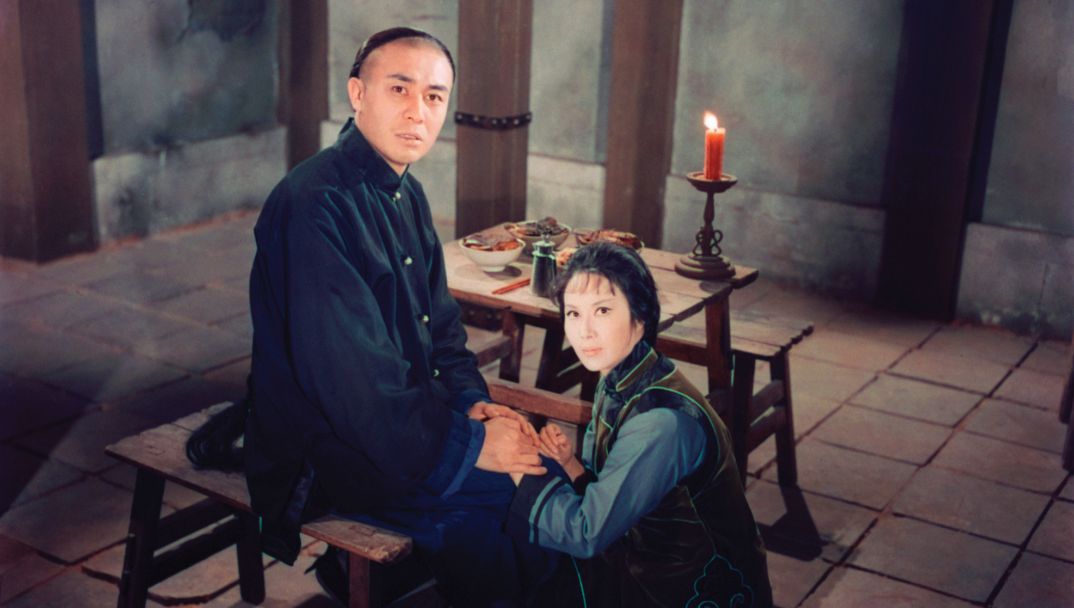
This film’s Chinese title can be literally translates as “Yang Naiwu and Little Cabbage,” one of the “Four Strange Cases of Late Qing” and likely the best known and best loved among them. Its popularity resulted from an organic, people-driven interaction of history with popular culture, with embellishment of story details made throughout the years, capturing public fascination of different generations.
Formally “Death of Zhejiang Person Ge Pinlian,” this is the story of Yang Naiwu, a respected scholar, and Xiao Bai Cai (Little Cabbage), an ordinary but beautiful housewife, who were wrongly accused of committing adultery and murdering her husband. This landmark case is a notorious indictment of the Qing Dynasty judiciary, flawed in its system and further corroded by a culture of corruption. The eventual upholding of justice in the story is an exception that proves the rule, which nonetheless provides popular satisfaction, leading to repeated staging in opera, literature and film.
Director Li Han-hsiang and Ho Meng-hua spice up the film with huang mei diao, an opera format enjoying a popular craze in the 1950s and 60s. Sung in standard Putonghua with melodic renditions adapted to popular music of the time, the huang mei songs, together with the operatic rhythm of the film’s staging, add touches of lyricism to the storytelling, generating special dramatic effects.
The quality of the image and sound of the screened version is short of ideal. We appreciate your understanding.